
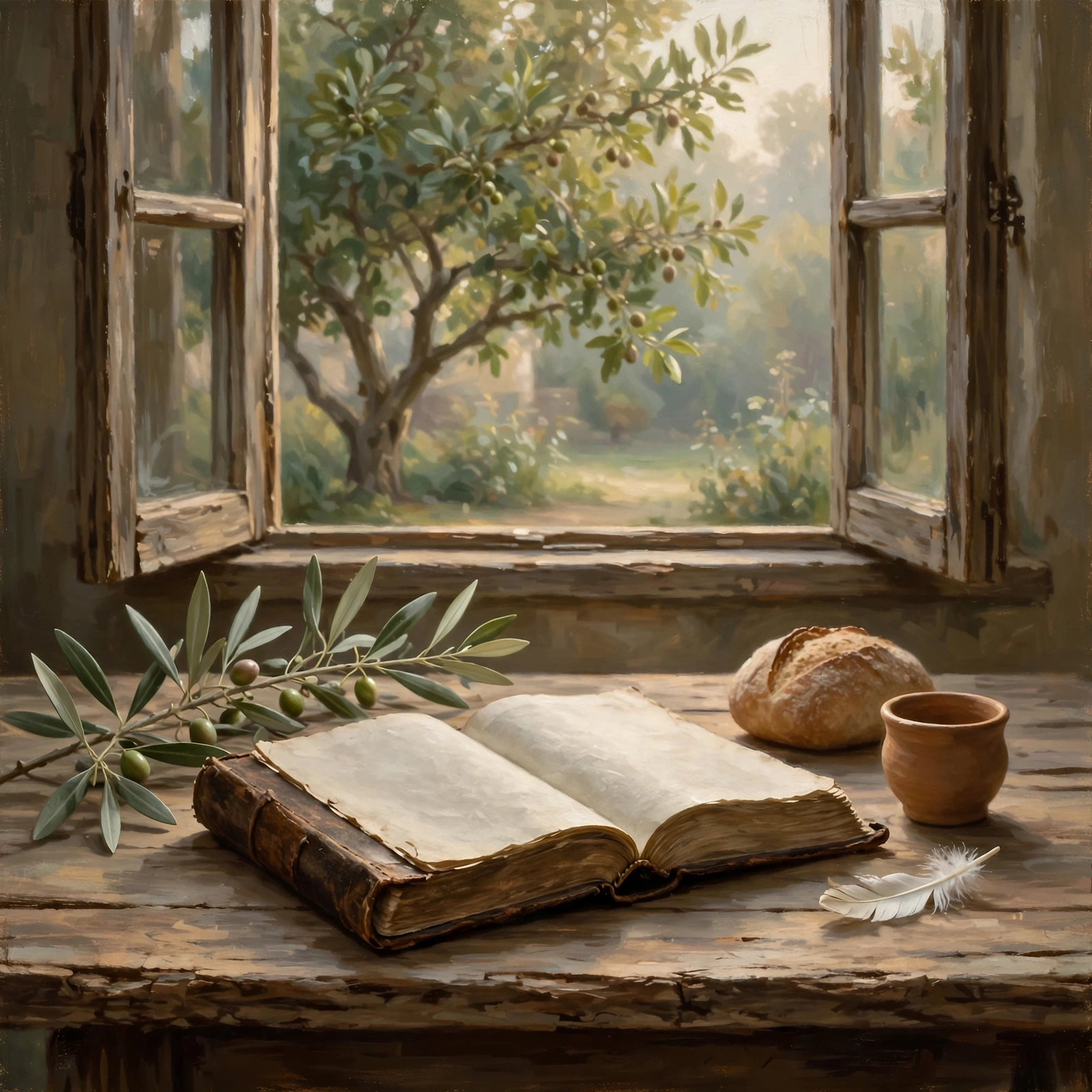
Symbols surround us in daily life, and this has been true since the earliest times.
Think about it: an apple with a bite taken out of it instantly brings a tech company to mind. The letters f and X represent social media platforms. A heart symbol says we love someone or like something. We give someone a star to say they're clever or to congratulate them. When receiving flowers, they may symbolise celebrations, sympathy, or appreciation.
Throughout history, archaeologists and historians have found profound symbolic meaning in ancient discoveries—from rock art and stone engravings to pottery and early forms of art— all containing symbols.
While some symbols can have a collective meaning, some are very personal.
I will never forget the small coin framed and hung on a wall in the home of a dear reverend and his wife, who had a great impact on my life. When people looked at it, they always told the story of how this coin was given to them in a very difficult time and kept as a reminder of God's provision and faithfulness.
For many faithful women in my life, whenever they see or find a feather, they know the Lord is speaking with them and reminding them of His closeness and care.
I’m sure you can think of many symbols which are valuable to you too, so in this article, let’s explore some of the most significant symbols used throughout the history of Christianity.
What is a Symbol? Biblical Symbolism Defined
The Oxford Learner's Dictionary defines a symbol as "a person, an object, an event, etc., that represents a more general quality or situation."
Symbolism is the “ use of symbols to represent ideas, especially in art and literature."
In biblical terms, it is better defined as a word, action, or object with a meaning beyond its literal sense, representing deeper moral or spiritual truth. Biblical symbolism, therefore, uses symbols to express profound ideas, spiritual realities, and divine truths that cannot be fully conveyed literally.
The First Biblical Symbols: Creation and the Garden of Eden
The earliest symbolism in the Bible appears in Genesis 1 and 2—right from creation itself.
The Tree of Life: Symbol of Eternal Life
The Tree of Life stands as one of the first symbols. It was positioned prominently in the centre of the Garden of Eden (Genesis 2:9).
This tree represented humanity's dependence on God, with God as the source of life, imparting it to humans. Through us, life then also flows to others and creation. The Tree symbolised eternal life and an unbroken relationship with God.
Light and Darkness: Divine Order and Chaos
The creation story itself holds deep symbolic meaning.
The light that God created on the first day (Genesis 1:3) represents:
God's presence
Divine wisdom and
The divine nature
Darkness symbolises chaos and the absence of God's order.
The Number Seven: Divine Perfection
The seven days of creation carry symbolic meaning with the number seven representing divine perfection and completeness. This pattern flows throughout Genesis, not only in the seven days of creation.
The first verse contains seven words in Hebrew, which would have attracted the attention of the reader. Key terms like "and it was so" and "God saw it was good" also occur seven times—all symbolising wholeness and God's perfection.
Early Symbolic Elements in Genesis
Other early symbols include:
Nakedness - representing shame and sin
The Garden of Eden - representing God's sanctuary from which His word flows to the nations
Beasts - referring to the ungodly or immoral
The serpent - symbolising Satan and deception
In Genesis 3, we are introduced to the serpent, symbolically representing Satan, deception, and the introduction of sin into the world—as confirmed and identified in Revelation 12:9: "that ancient serpent, who is called the devil and Satan, the deceiver of the whole world."
The symbol of the serpent is also used throughout Scripture, with that and other symbols which were important to the Israelites.
Old Testament Symbols of God’s Power and Redemption
The Bronze Serpent: Biblical Symbol of Salvation and Faith
The bronze serpent that Moses lifted on a pole (Numbers 21:4-9) carries profound symbolic meaning.
When the Israelites were dying from venomous snake bites as punishment for their rebellion, God instructed Moses to craft a bronze serpent and place it on a pole. Anyone bitten who looked at the bronze snake would live.
Although the serpent usually signifies sin and evil, here it becomes a means of deliverance—pointing to how Christ would take upon Himself the sins of the world.
Jesus Himself explained this symbolism in John 3:14, stating that "as Moses lifted up the serpent in the wilderness, so must the Son of Man be lifted up."
Just as the Israelites had to look in faith to the bronze serpent to be healed, so must people look to Christ on the cross in faith to receive salvation.
The Ark of the Covenant: Symbol of God's Presence
The Ark of the Covenant, as read about in Exodus, held immense symbolic significance as the most sacred object in ancient Israel. It symbolised God's presence amongst His people.
The contents held within the ark were deeply symbolic:
The stone tablets with the Ten Commandments represented God's covenant and law.
Aaron's rod that budded symbolised God's approval of the priesthood and His power to bring life from death.
The golden jar of manna represented God's faithful provision for His people.
The mercy seat, the lid of the Ark, was the place where the high priest sprinkled blood to atone for the sins of the whole nation of Israel. This symbolically pointed to Christ's ultimate sacrifice that would bring mercy and reconciliation between God and humanity.
The entire structure of the Temple—where the Ark was often inside the Tabernacle behind a curtain or veil—pointed forward to Jesus. Through His crucifixion, when the veil was torn, He reconciled us to God. He made us righteous so that we can approach God with confidence and full assurance of faith. (Hebrews 10:19-22)
Unleavened Bread: Symbol of Purity and Sinlessness
A humble symbol of bread also holds rich symbolic meaning in Jewish tradition, especially unleavened bread connected to Passover. It commemorates the Israelites' hasty departure from Egypt when they had no time to let their bread rise (Deuteronomy 16:3).
The deeper symbolism is contained in the leaven as a representation of sin. Throughout Scripture, leaven (yeast) symbolised fermentation, corruption, and sin (Leviticus 2:11), with unleavened bread therefore representing purity, sinlessness, and a life free from sin.
By eating unleavened bread during Passover, the Israelites symbolically began the season without the contaminating influence of Egypt, eating only the pure "bread of life." This symbolism points forward to Jesus, who would become the ultimate "unleavened bread"—pure and without the corruption of sin.
Living Symbols in the Christian Life Today
The Bible is so rich in symbolism. As you read it, always be open to recognising and studying the deeper meaning behind these symbols. This isn’t just beautifully enriching, but as we explored in Is the Bible the truth or has Science proven it wrong?, understanding symbolism is crucial for proper biblical interpretation.
Let's examine some of these ancient symbols that still form part of believers' lives today.
Holy Communion: Jesus as the Bread of Life
In John 6, Jesus continues with the bread symbolism, using the metaphor of the "bread of life" when speaking to the crowds after feeding the 5,000. He said: "I am the bread of life. Whoever comes to me will never go hungry, and whoever believes in me will never be thirsty" (John 6:35).
The symbolism of bread reaches its climax when Jesus, at the Last Supper, explained that the bread symbolises His body broken for us and the wine His blood shed for the forgiveness of our sins (Matthew 26:26-28).
This continues today when believers celebrate Holy Communion (the Eucharist). The act of eating the bread and drinking the wine represents receiving Christ and His benefits—nourishment, life, and spiritual blessings.
Communion also symbolises unity amongst believers—one bread shared by many (1 Corinthians 10:17).
Anointing Oil: Symbol of the Holy Spirit and Consecration
Today, anointing oil is still widely used amongst believers for prayer, healing, and spiritual protection. It symbolises God's power and presence, the Holy Spirit, divine appointment, consecration, and empowerment. The value, as with all other symbols, lies not in the physical substance itself but in the heart and faith of the believer.
This practice follows the use of anointing oil in the Bible. When prophets, priests, and kings were anointed with oil, it symbolised that they were set apart for God's specific purpose and empowered by His authority. When Samuel anointed David as king, "the Spirit of the Lord came powerfully upon David from that day on" (1 Samuel 16:13). The very name Messiah (Hebrew) or Christ (Greek) means "anointed one," pointing to Jesus as the ultimate fulfilment of this symbolism—the one anointed by God's Spirit for the work of redemption.
The practice of anointing the sick with oil (James 5:14) still symbolises healing and restoration through the power of the Holy Spirit.
The significance of oil in the use and symbolism contained in the Bible is vast, too much to fully explore in this article alone. At both his birth and before his death, Jesus received oil. The wise men’s gift of frankincense and myrrh at his birth symbolised His identity as God incarnate, His future sacrificial death, and His status as the ultimate anointed King and Saviour. The humble anointing of Jesus’ feet with oil by the woman not long before his death was equally rich in symbolic meaning, preparing for His death and burial (John 12:3).
Incense: Symbol of Prayer Rising to God
Although not used equally amongst different Christian denominations, incense is a beautiful picture of the prayers of God's people rising to Him and being a pleasing aroma to God.
Psalm 141:2 states, "May my prayer be set before you like incense," and in Revelation 5:8, John sees "golden bowls full of incense, which are the prayers of the saints," confirming its symbolic connection.
The altar of incense and the burning of incense held sacred significance in biblical worship. The incense was burnt continually before the Lord in the Tabernacle and Temple (Exodus 30:7-8). This symbolised God's presence and purification, sanctifying places of worship and the faithful themselves.
Today, incense remains a meaningful and present part of Christian worship during services, prayer, and special ceremonies, continuing the ancient biblical tradition, serving as a sensory symbol of prayers rising to God, purification, and reverence for God’s presence.
Baptism: Symbol of New Life in Christ
Our baptism is such a significant event for all believers, as it symbolises cleansing and forgiveness of our sins. We identify with Christ's death, burial, and resurrection and are accepted to new life in Christ, entering and being accepted into the family of God. We are included in His covenant with His people, having His name written on our souls and our names written on the palms of His hand. (Romans 6:3-4, Acts 22:16).
Wedding Rings: Symbol of Eternal Covenant
Whilst wedding rings aren’t explicitly mentioned in the Bible, they carry symbolic meaning deeply rooted in biblical principles.
In biblical times, rings symbolised authority, dignity, and covenant. Pharaoh gave Joseph his signet ring as a symbol of authority (Genesis 41:42), and the father welcomed the prodigal son back, giving him a ring to symbolise his restored sonship (Luke 15:22).
Wedding rings only became part of Christian ceremonies in the ninth century. The circular shape with no beginning or end symbolises eternal love and unending commitment—mirroring God's eternal nature and covenant of faithfulness and the eternal covenant between Christ and His Church.
The wedding ring serves as a tangible reminder of the marriage vows made before God—a permanent covenant bond between husband and wife.
Christian Symbols of Identity
Hopefully, our actions of love towards others would speak louder to testify of our hope and joy found in Christ, but we know that the following two symbols will undeniably recognise you as a follower of Christ without saying a word or doing anything:
The Fish Symbol (Ichthys)
The fish symbol, or ichthys/ichthus, is one of Christianity's earliest symbols, dating to the second century.
Although very multilayered and interesting to study independently, what was most interesting to me was that the Greek word for fish ΙΧΘΥΣ (ichthys) forms an acrostic for the phrase Ἰησοῦς Χριστός, Θεοῦ Υἱός, Σωτήρ (Iēsous Christos, Theou Yios, Sōtēr), meaning "Jesus Christ, God's Son, Saviour." This simple symbol contained a concise confession of Christian faith.
During times of persecution in the Roman Empire, Christians used the fish as a secret sign to identify one another and locate safe meeting places without arousing suspicion.
The symbol also connects well with Jesus' calling to His disciples to be "fishers of men" (Matthew 4:19).
The Cross
Finally, the cross stands as Christianity's most recognisable symbol.
Although Christians making the sign of the cross dates back to the third century or even earlier as an outward sign of faith and identification, the physical symbol only became prominent in the fourth century under Emperor Constantine.
Jesus' death on the cross transformed this Roman instrument of execution into a symbol of redemption, the ultimate sacrifice, and a sign of God's love for us and victory over sin and death (John 3:16). It symbolises both judgement upon sin and grace freely offered to all who believe.
The vertical beam is often interpreted as representing the relationship between God and humanity, whilst the horizontal beam represents reconciliation between people. We need a constant reminder of this: God wants us reconciled with Him. He wants us reconciled to one another, living in peace, love, and harmony towards each other.
Understanding Symbols of our Faith: A Call to Reflection
Next time when you see a rainbow, a lamb, a vine and branches, or any other biblical symbol, take the time to reflect on what these and so many other symbols mean to you. Thank God our Creator for giving us symbols and the ability to create more and to understand the deeper meaning behind them.
I hope that through reading and exploring the symbols discussed in this article, you realised again how they can invoke emotions within us, serve as important reminders about something or someone, create unity, and instil discipline.
We are fleshly creatures and therefore need physical things to serve as reminders and to "speak" to us. We are also creative creatures with wonderful minds through which physical things and immaterial concepts can hold profound symbolic meaning for us.
Symbols are certainly not idols to be worshipped. Their purpose should be to draw us closer to God and to others and to our God-given calling and purpose on this earth. Biblical symbolism enriches our personal faith journey, helps us understand Scripture’s deeper truths and connects us to thousands of years of faith tradition.